10 Common Signs of Anxiety You Shouldn’t Ignore

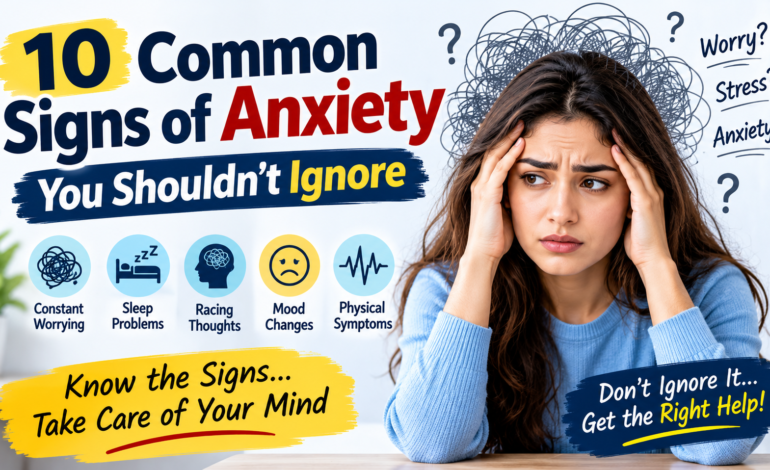
10 Common Signs of Anxiety You Shouldn’t Ignore
Anxiety is something almost everyone experiences at some point. It may appear before an important meeting, during a difficult conversation, or when life feels uncertain. In many situations, these feelings pass once the stressful moment is over.
But what happens when your mind never seems to slow down?
You may find yourself worrying about ordinary situations, struggling to sleep, feeling tense for no obvious reason, or avoiding activities you once enjoyed. These changes can be easy to dismiss, especially when you are trying to keep up with everyday responsibilities.
Recognizing the signs of anxiety can help you understand what you are experiencing and decide whether it is time to seek support. Anxiety can affect thoughts, emotions, physical health, and behavior—and it does not look exactly the same for everyone.
Let’s explore ten common signs worth paying attention to.
1. You Worry Even When Nothing Seems Wrong
One of the most recognizable signs of anxiety is persistent worrying.
You might spend hours thinking about situations that have not happened. A small work-related mistake could turn into fears about losing your job. A delayed message from someone you care about might make you imagine several negative explanations.
The concern is not simply that you worry. Everyone does. The important difference is how difficult it becomes to control those thoughts.
You may notice that you:
- Expect the worst in everyday situations.
- Keep replaying conversations in your head.
- Worry about several unrelated things at once.
- Frequently seek reassurance from other people.
- Struggle to enjoy the present because you are thinking about what might happen next.
When worrying becomes persistent and begins interfering with everyday life, it deserves attention.
2. You Feel Restless or Constantly on Edge
Do you find it difficult to relax, even when you finally have some free time?
Anxiety can create a feeling of being permanently switched on. You might feel uncomfortable sitting quietly, become impatient easily, or constantly look for something that needs your attention.
Sometimes, this restlessness is subtle. You may keep checking your phone, moving between tasks, or feeling that something needs to be done without knowing exactly what it is.
Your body may appear calm to other people while your mind feels busy and unsettled.
Pay attention if relaxing has started to feel like another task rather than something enjoyable.
3. You Struggle to Concentrate
Anxiety can make ordinary mental tasks surprisingly difficult.
When your attention is occupied by worries, it may become harder to focus on reading, working, studying, or following a conversation. You might open an email several times without understanding it or forget what you intended to do next.
This can become frustrating, particularly when you know you are capable of concentrating under other circumstances.
You may also start worrying about your lack of focus, creating another layer of pressure.
If concentration problems happen regularly alongside excessive worry or restlessness, consider discussing the pattern with a healthcare professional.
4. Your Sleep Pattern Has Changed
The end of the day is often when anxious thoughts become more noticeable.
During busy hours, work and responsibilities may keep your attention occupied. Once everything becomes quiet, worries about tomorrow, relationships, money, or unfinished tasks can become harder to ignore.
Anxiety may contribute to:
- Taking a long time to fall asleep.
- Waking up during the night.
- Thinking repeatedly about stressful situations.
- Feeling tired even after spending enough time in bed.
- Worrying about not getting enough sleep.
Poor sleep can also make it harder to manage emotions and concentration the following day.
If sleep difficulties continue, it is worth exploring their possible causes rather than assuming they are simply part of a busy lifestyle.
5. You Experience Physical Symptoms Without Understanding Why
Anxiety does not only happen in your thoughts. It can also activate the body’s stress response.
When your body senses a possible threat, it prepares to respond. This can lead to noticeable physical changes, even when the situation is not physically dangerous.
Possible physical symptoms include:
- A faster or more noticeable heartbeat.
- Sweating or trembling.
- Muscle tightness.
- Headaches.
- Dizziness or lightheadedness.
- Nausea or stomach discomfort.
- Shortness of breath.
These symptoms can feel alarming, particularly when they appear unexpectedly.
6. Small Problems Make You Unusually Irritable
Anxiety does not always look like visible fear. Sometimes, it appears as frustration, impatience, or a shorter temper.
You may notice that minor inconveniences affect you more than they used to. A delayed appointment, a noisy environment, or a simple disagreement might leave you feeling overwhelmed.
This can happen when your mind is already carrying a heavy load of worries.
You might also feel guilty afterward because your reaction seems bigger than the situation itself.
If irritability regularly occurs alongside poor sleep, excessive worrying, or constant tension, it may be useful to look at the bigger picture.
7. You Start Avoiding Situations That Make You Uncomfortable
Avoidance can be one of the less obvious behavioral signs of anxiety.
Perhaps you stop attending social events because you worry about being judged. You might postpone phone calls, avoid driving on certain roads, or turn down opportunities because they make you nervous.
Avoiding something can bring immediate relief. The difficulty is that repeatedly avoiding feared situations may make them feel increasingly difficult to face.
For example, cancelling one social plan might feel manageable. But if you gradually stop meeting friends altogether, anxiety may begin limiting your relationships and daily routine.
If avoidance is taking away activities that matter to you, professional guidance can help you explore healthier ways to respond.
8. You Experience Sudden Waves of Intense Fear
Some people experience episodes of sudden, overwhelming fear or discomfort known as panic attacks.
These episodes can feel frightening because physical symptoms may develop quickly.
A panic attack may involve:
- A pounding or racing heartbeat.
- Sweating or shaking.
- Feeling dizzy or lightheaded.
- Difficulty breathing.
- Chest discomfort.
- Nausea or tingling sensations.
- A feeling of losing control or impending danger.
Not everyone who experiences a panic attack has panic disorder. A diagnosis depends on the broader pattern of symptoms and their impact.
If episodes happen repeatedly, or you begin worrying constantly about another episode, speak with a qualified healthcare professional.
New or severe chest pain, breathing difficulty, or other potentially urgent symptoms should receive prompt medical attention rather than being self-diagnosed as panic.
9. Your Muscles Feel Tight Most of the Time
You may not always notice how much tension your body is holding.
Anxiety can contribute to prolonged muscle tightness, particularly around the neck, shoulders, jaw, and back. Some people notice that they clench their teeth, raise their shoulders, or hold their breath when concentrating.
Over time, this tension may contribute to headaches, discomfort, and tiredness.
A short break, gentle movement, or relaxation exercise may help you notice and release some of that tension. However, ongoing pain should be evaluated because it can have causes unrelated to anxiety.
10. Anxiety Begins Affecting Your Everyday Decisions
Perhaps the most important sign is not one particular symptom but the effect anxiety has on your life.
You may still go to work, take care of your family, and complete daily responsibilities. However, doing these things may require much more emotional energy than before.
Ask yourself:
- Am I turning down opportunities because I feel nervous?
- Have I stopped enjoying activities I used to look forward to?
- Is worrying affecting my relationships?
- Do I struggle to make ordinary decisions?
- Has my sleep or concentration become noticeably worse?
- Do I regularly change my plans to avoid uncomfortable feelings?
If anxiety is influencing your choices, relationships, work, or quality of life, it is worth seeking professional advice.
Anxiety vs. Everyday Stress: What’s the Difference?
Stress and anxiety can feel similar, but they are not always the same.
Stress often develops in response to a recognizable pressure, such as an upcoming examination, a financial concern, or a demanding work schedule. Anxiety may continue even when there is no immediate problem to solve.
There is overlap, and one experience does not automatically indicate a mental health disorder.
| Everyday Stress | Possible Anxiety Pattern |
|---|---|
| Often linked to a specific situation. | May involve several worries at once. |
| May improve when the problem is resolved. | Can continue even without an immediate trigger. |
| Usually feels connected to a clear pressure. | May involve anticipating problems that have not happened. |
| Often manageable once circumstances change. | May become difficult to control. |
| May have a temporary effect on sleep or focus. | Can repeatedly affect sleep, concentration, and daily activities. |
Only a qualified professional can assess whether symptoms meet the criteria for an anxiety disorder.
What Can Trigger or Contribute to Anxiety?
There is no single explanation for why someone develops anxiety. Different factors may contribute, and several can occur together.
- Ongoing pressure: Work demands, financial uncertainty, or relationship difficulties can contribute to persistent stress.
- Difficult experiences: Traumatic or upsetting events may affect how a person responds to future situations.
- Family history: Some anxiety conditions may have a genetic component.
- Health concerns: Physical illness and changes in health can influence emotional well-being.
- Lifestyle factors: Poor sleep and excessive caffeine may make anxious feelings harder to manage in some people.
Having one of these factors does not mean that someone will develop an anxiety disorder. Each person’s circumstances are different.
What Can Help You Manage Anxiety?
There is no single solution that works for everyone. The right approach depends on the symptoms, their severity, and the individual’s circumstances.
Create a More Consistent Sleep Routine
Try to maintain regular sleeping and waking times. A calmer bedtime routine and less screen use before bed may make it easier to wind down.
Make Time for Physical Activity
Walking, swimming, cycling, and other enjoyable activities can support general well-being. Start with a manageable amount rather than setting unrealistic goals.
Practice Relaxation Techniques
Slow breathing, mindfulness, and gentle relaxation exercises may help you manage moments of tension. They are useful coping tools, but they are not a replacement for professional treatment when it is needed.
Talk to Someone You Trust
Sharing what you are experiencing with a trusted friend, family member, counselor, or healthcare professional can help you feel less alone.
Consider Professional Treatment
Psychotherapy, including cognitive behavioral therapy (CBT), is an established treatment option for anxiety disorders. Depending on the individual’s needs, a healthcare professional may also discuss medication or other approaches.
Do not start, stop, or change prescribed medication without speaking to the prescribing professional.
When Should You Seek Professional Help?
You do not need to wait until anxiety becomes overwhelming before asking for help.
Consider speaking with a doctor or qualified mental health professional if:
- Worry is becoming difficult to control.
- Symptoms keep returning or persist over time.
- Sleep, work, education, or relationships are being affected.
- You frequently experience panic-like episodes.
- You avoid important activities because of fear.
- Self-help strategies are not making enough difference.
A professional can assess your symptoms, consider other possible causes, and discuss suitable treatment options.
If you or someone else is in immediate danger or experiencing a mental health emergency, contact local emergency services or seek urgent medical care.
Frequently Asked Questions About Anxiety
1. What are the first signs of anxiety?
Early signs can include frequent worrying, restlessness, trouble sleeping, irritability, difficulty concentrating, and physical tension. Symptoms vary from person to person.
2. Can anxiety cause physical symptoms?
Yes. Anxiety can contribute to a racing heartbeat, sweating, trembling, dizziness, muscle tension, and stomach discomfort. However, physical symptoms can have other causes and should not automatically be attributed to anxiety.
3. Can anxiety affect your stomach?
Yes. Some people experience nausea, stomach discomfort, changes in appetite, or digestive disturbances when anxious. Persistent digestive problems should be discussed with a healthcare professional.
4. Can anxiety make you tired?
It can. Constant worrying, muscle tension, and disrupted sleep may contribute to fatigue and difficulty concentrating during the day.
5. Is anxiety the same as stress?
No. Stress is often connected to a particular pressure or situation, while anxiety can involve ongoing worry or fear that continues even without an immediate threat. The two can overlap.
6. Can anxiety go away without treatment?
Some temporary anxious feelings improve when a stressful situation changes. Persistent or disruptive anxiety may need professional support. A healthcare professional can help identify suitable options.
7. When should I talk to a doctor about anxiety?
Consider seeking advice when anxiety is difficult to manage, keeps returning, affects sleep or relationships, or interferes with everyday activities.
Final Thoughts
Anxiety can be difficult to recognize because it does not always appear as obvious fear or nervousness. Sometimes, it shows up as restless nights, physical tension, constant overthinking, irritability, or gradually avoiding everyday situations.
Noticing these changes is an important first step, but it does not mean you should diagnose yourself based on a checklist. Similar symptoms can have different explanations, and a qualified professional can help you understand what is happening.
You deserve support before anxiety takes over the parts of life that matter to you. If these experiences feel familiar and are affecting your daily routine, consider reaching out for professional guidance.