The 8 Glasses of Water a Day Myth: How Much Do You Need?

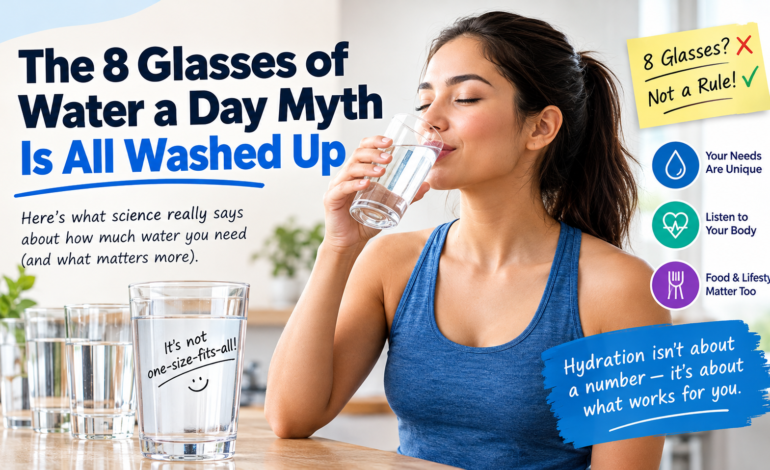
The 8 Glasses of Water a Day Myth Is All Washed Up
For years, we have heard the same advice: drink eight glasses of water every day. It sounds simple enough. Fill a bottle, keep counting your glasses, and make sure you reach your daily target before bed. But is eight glasses really the right amount for everyone?
Not exactly. The familiar eight-glasses rule can be a useful reminder to drink fluids, but it is not a universal medical requirement. Your hydration needs depend on several factors, including your activity level, the weather, your diet, your age, and your health.
That does not mean water is overrated or that you can ignore hydration. It simply means there is more to the story than hitting one number every day.
The key takeaway: You do not necessarily need exactly eight glasses of plain water each day. Fluids from other beverages and moisture in foods also contribute to your total water intake.
Where Did the Eight Glasses of Water Rule Come From?
The idea that everyone should drink eight glasses of water daily has been repeated in health articles, fitness advice, and everyday conversations for decades. Its simplicity helped it become a familiar guideline.
However, the body’s water needs cannot be reduced to a single glass count that works for every person. An individual who spends most of the day in an air-conditioned office may have different needs from someone who exercises outdoors in hot weather.
Nutrition guidance also distinguishes between total water intake and plain drinking water. Total water includes water, other beverages, and the moisture found in foods.
The National Academies’ reference values for adults illustrate this distinction. For adults ages 19 to 30, the adequate intake is about 3.7 liters of total water per day for men and 2.7 liters for women. These figures include water from food and all beverages; they are not instructions to drink that amount of plain water alone.
These are reference values, not exact daily requirements for every individual. A person’s needs may be higher or lower depending on their circumstances.
Source: National Academies — Dietary Reference Intakes for Water.
How Much Water Should You Drink a Day?
There is no single amount that is perfect for everyone. Instead of treating eight glasses as a strict rule, consider what your body needs throughout the day.
Your activity level matters
Exercise increases fluid loss through sweat and breathing. If you go for a long run, play a sport, work out at the gym, or have a physically demanding job, you may need more fluids than someone who is mostly sedentary.
Hot weather changes your needs
Temperature matters, too. On a hot day, particularly when humidity is high, you may sweat more than usual. People working outdoors or spending extended periods in the heat need to pay closer attention to fluid intake.
Your diet contributes to hydration
Water does not come only from a drinking glass. Fruits, vegetables, soups, yogurt, and other foods contain water. Eating foods with high water content can contribute to your daily intake.
Your health and life stage matter
Pregnancy, breastfeeding, fever, vomiting, diarrhea, and certain medical conditions can change fluid needs. Some people with heart, kidney, or liver conditions may also have specific fluid restrictions.
If your healthcare professional has given you a fluid limit or an individualized hydration plan, follow that advice rather than a general online target.
Does Coffee Count Toward Your Daily Water Intake?
Yes, coffee and tea contribute to total fluid intake. They contain water, even though caffeine can have a mild diuretic effect.
For most healthy adults, moderate coffee or tea consumption still contributes to hydration. You do not automatically lose all the fluid in a caffeinated drink because it contains caffeine.
That said, plain water remains a great everyday choice because it hydrates without added sugar or calories. If your usual drinks contain lots of added sugar, replacing some of them with water can be a helpful change.
Source: National Academies — Water Intake Guidance.
Signs You May Not Be Drinking Enough Water
Your body can give you useful clues when you need more fluids. Thirst is one signal, although it may not always be reliable in older adults or people with certain health conditions.
Possible signs of dehydration include:
- Feeling thirsty or having a dry mouth.
- Urinating less frequently than usual.
- Dark yellow urine, although some medicines and supplements can also change urine color.
- Headaches or unusual tiredness.
- Dizziness or lightheadedness.
- Difficulty concentrating when dehydration is contributing to the problem.
These signs do not always mean dehydration is the cause. If symptoms are severe, persistent, or accompanied by confusion, fainting, or an inability to keep fluids down, seek prompt medical attention.
The CDC explains that dehydration can affect normal body functions and may contribute to problems such as unclear thinking, mood changes, overheating, and constipation.
Source: CDC — About Water and Healthier Drinks.
Can You Drink Too Much Water?
Yes. Although dehydration is a concern, drinking excessive amounts of water in a short period can also be dangerous.
Too much water can dilute the sodium in your blood, causing a condition called hyponatremia. In severe cases, this can become a medical emergency.
There is no need to force yourself to drink large quantities just to meet an arbitrary target. Spread fluid intake throughout the day and adjust it to your activity, environment, and individual needs.
Endurance athletes and people exercising for long periods in hot conditions may need a more deliberate fluid and electrolyte plan. Anyone with a medical condition affecting fluid balance should follow professional guidance.
Does Drinking More Water Improve Your Health?
Getting enough water is essential, but drinking extra water does not automatically make you healthier. The benefits depend partly on what you were drinking before and whether you were underhydrated.
It supports normal body functions
Water helps regulate body temperature, lubricate joints, protect sensitive tissues, and remove waste through urine, sweat, and bowel movements.
It can help replace sugary drinks
Choosing plain water instead of sugar-sweetened beverages can reduce your intake of added sugar and calories. This can be a practical part of a balanced eating pattern.
It helps prevent dehydration
Adequate fluid intake is especially important during hot weather, physical activity, and illnesses that cause fluid loss. The aim is to maintain hydration, not to drink as much water as possible.
Source: CDC — Water and Health.
Simple Ways to Stay Hydrated Without Counting Every Glass
If tracking every glass feels like another chore, a few everyday habits can make hydration easier.
- Keep water nearby: A reusable bottle makes it easier to drink when you are thirsty.
- Drink with meals: Having water at breakfast, lunch, and dinner can help build a routine.
- Increase fluids when needed: Pay extra attention during exercise, heat, fever, vomiting, or diarrhea.
- Eat water-rich foods: Include foods such as watermelon, oranges, cucumber, tomatoes, and soups.
- Choose water more often: Replace sugary drinks with water when practical.
- Pay attention to your body: Thirst and changes in urination can offer useful clues, although neither is a perfect measure in every situation.
You do not need an expensive bottle, a complicated hydration app, or a rigid schedule to take care of your fluid needs.
Who Needs to Be More Careful About Hydration?
Some people need extra attention to fluid intake because their needs can change quickly or because they may not recognize dehydration as easily.
- People who exercise for long periods or work in hot environments.
- Older adults, who may experience a weaker sense of thirst.
- People with fever, vomiting, or diarrhea.
- Pregnant or breastfeeding people.
- People taking medications that affect fluid balance.
- People with medical conditions that require a specific fluid plan.
If you have a chronic health condition or have been told to restrict fluids, ask your healthcare professional how much you should drink. General hydration advice may not be appropriate for every medical situation.
Frequently Asked Questions
Is drinking eight glasses of water a day a myth?
It is a myth if it is presented as a strict rule for everyone. Eight glasses can be a convenient reminder, but actual fluid needs vary. Food and other beverages also contribute to total water intake.
Does coffee count as water intake?
Yes. Coffee contributes to total fluid intake for most healthy adults. Plain water is still an excellent everyday choice, especially as a replacement for sugary drinks.
Does drinking water help with weight management?
Water has no calories, so replacing sugary drinks with water can reduce calorie intake. However, drinking extra water by itself is not a guaranteed weight-loss method.
What color should urine be if I am hydrated?
Pale yellow urine is often a useful general clue, but color is not a perfect hydration test. Vitamins, medicines, foods, and medical conditions can affect urine color.
Should I drink water even when I am not thirsty?
Regular access to fluids and drinking with meals can help maintain hydration. However, thirst is a useful guide for many healthy adults. Older adults, athletes, and people with certain medical conditions may need a more structured plan.
Can I drink too much water in one day?
Yes. Excessive water intake, particularly over a short period, can dangerously lower blood sodium levels. Avoid forcing large quantities of water and seek individualized advice if you have concerns about fluid balance.
The Bottom Line
The eight-glasses-a-day rule is easy to remember, but it was never a perfect prescription for every person. Your daily water needs depend on your activity, the weather, your diet, your health, and other individual factors.
Instead of worrying about reaching an exact number, build sensible hydration habits. Drink water regularly, include fluids with meals, eat a varied diet, and pay attention to situations that increase fluid loss.
The goal is not to drink the most water. It is to drink enough to support your body’s needs.
Health disclaimer: This article is for general educational purposes and is not a substitute for personalized medical advice. People with medical conditions that affect fluid balance should follow guidance from their healthcare professional.