How Smoking Affects Oral Health: 10 Serious Risks You Should Never Ignore

When people think about the dangers of smoking, they often focus on lung cancer, heart disease, and breathing problems. While these health concerns are serious, many people overlook the significant impact smoking has on oral health.
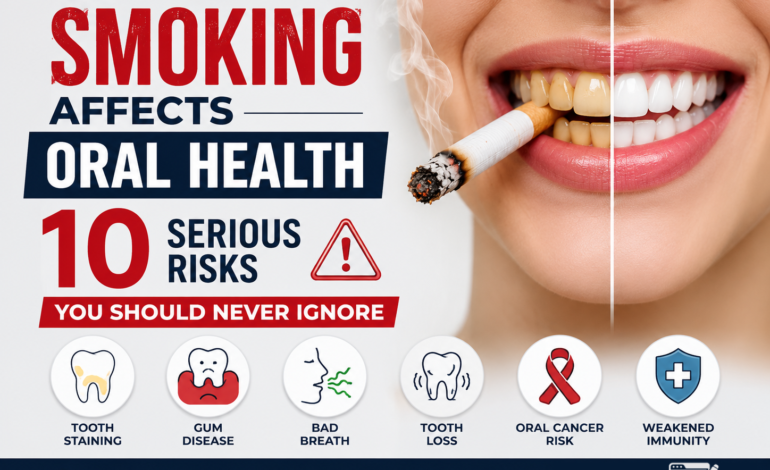
Your mouth is one of the first areas exposed to the harmful chemicals found in tobacco products. Every cigarette contains thousands of chemicals that can damage your teeth, gums, tongue, and overall oral tissues. Over time, smoking can lead to stained teeth, chronic bad breath, gum disease, tooth loss, and even oral cancer.
Understanding how smoking affects oral health is essential for protecting your smile and maintaining long-term well-being. Whether you’re a smoker, a former smoker, or simply interested in learning more about oral health, this guide will explain the most serious risks associated with smoking and why quitting can make a major difference.
What Happens to Your Mouth When You Smoke?
Every cigarette contains harmful chemicals that reduce blood flow, weaken the immune system, and increase bacterial growth inside the mouth.
- Reduced blood circulation to gums
- Increased plaque buildup
- Higher infection risk
- Delayed healing
- Greater oral cancer risk
1. Smoking Causes Severe Tooth Staining
Nicotine and tar gradually discolor tooth enamel, causing yellow and brown stains that become difficult to remove.
Common Signs
- Yellow teeth
- Brown stains
- Dull smile appearance
2. Smoking Leads to Chronic Bad Breath
Smoking reduces saliva production and promotes bacterial growth, leading to persistent bad breath.
3. Smoking Increases the Risk of Gum Disease
Smoking weakens the body's ability to fight infection, making gum disease more likely.
Symptoms of Gum Disease
- Bleeding gums
- Swollen gums
- Persistent bad breath
- Gum recession
4. Increased Risk of Tooth Loss
Advanced gum disease caused by smoking can damage supporting bone and tissue, leading to tooth loss.
5. Delayed Healing After Dental Procedures
Smoking slows blood flow and oxygen delivery, delaying recovery after tooth extractions, implants, and oral surgeries.
6. Increased Risk of Oral Cancer
Smoking is one of the leading causes of oral cancer affecting the tongue, lips, gums, and throat.
Warning Signs
- Mouth sores that do not heal
- White or red patches
- Difficulty swallowing
- Persistent mouth pain
7. Smoking Weakens the Immune System
Smokers often experience more oral infections because smoking reduces the body's ability to fight harmful bacteria.
8. Increased Plaque and Tartar Buildup
Smoking encourages plaque accumulation, which can eventually harden into tartar and contribute to cavities and gum disease.
9. Reduced Sense of Taste and Smell
The chemicals found in tobacco products damage taste buds and sensory receptors, reducing flavor perception.
10. Higher Risk of Dental Implant Failure
Smoking can interfere with the healing process required for dental implants to properly integrate with the jawbone.
Can Oral Health Improve After Quitting Smoking?
Yes. Many oral health improvements begin shortly after quitting smoking.
- Fresher breath
- Healthier gums
- Better healing
- Improved taste and smell
- Reduced oral cancer risk
Tips to Protect Your Oral Health
- Brush twice daily
- Floss every day
- Drink plenty of water
- Visit your dentist regularly
- Quit smoking as soon as possible
Frequently Asked Questions
Can smoking cause gum disease?
Yes. Smoking significantly increases the risk of gum disease by weakening the immune system and reducing blood flow.
Does smoking cause bad breath?
Yes. Smoking promotes bacterial growth and dry mouth, leading to chronic bad breath.
Can quitting smoking improve oral health?
Absolutely. Quitting smoking improves gum health, reduces bad breath, and lowers the risk of serious oral diseases.
Final Thoughts
Smoking affects far more than your lungs. It can damage your teeth, gums, and overall oral health in ways that may become permanent over time. By understanding these risks and taking steps to quit smoking, you can protect your smile and improve your long-term health.